


Thinking in public is the practice of making the reasoning behind a finished work visible: the context, sources, influences, criteria, alternatives, rejections, failures and changes of mind that shaped it.
My central claim is that, in an environment where AI can generate endless polished content, the finished output is no longer the strongest evidence of expertise. What becomes more valuable is the decision trail behind it. By showing what you considered, why you chose one direction, what you discarded and what caused you to revise your position, you make your judgment observable and easier to evaluate.
This does not prove that your conclusions are correct. It gives readers, prospective clients and AI agents evidence they can inspect, compare, challenge and verify.
Learning in public shows what you discover. Building in public shows what you create. Thinking in public shows how you decide.
For independent experts, that visible process can become a powerful source of authority, credibility, differentiation and trust.
I help experienced independent consultants, advisors and small expert-led firms that already deliver valuable work, but whose online presence fails to show why their expertise is different and worth paying for.
In this issue:
Thinking in Public
What’s Thinking in Public?
Thinking in public means transparently showing your mental process: its context and influences, and the steps, decisions, criteria, failures and rejections that surround any story, product or idea.
Showing how you think, by sharing more of the context, influences and provenance of the objects and topics you devote your attention to, is becoming a key value-bearing element in establishing authority, credibility and trust, for entrepreneurs and experts alike.
Everything around, beyond and before what used to be the product is acquiring more importance and relevance by the day.
The reason for this has not changed: when there is an overabundance of content, tools and ideas, what gives these things value is not simply their aesthetic or nominal value, but their provenance stories, the context in which they grew, the process they went through and the sequence of decisions that made them exist.
How you thought through which article to write, what you discarded and what you changed your mind about is now worth more than whatever you will eventually write in it.
Why “Thinking in Public” Is Relevant
A couple of unique editorial strategies have emerged in recent years, designed to earn the trust and confidence of readers and prospective customers. They diverge from and go counter to the classical thought-leadership-building mantra (= develop a clear point of view + write consistently + help others through the work and ideas you highlight).
Both of these approaches introduce transparency and vulnerability by showing how a person actually approaches something challenging and what they discover by doing it.
Thinking in public is a natural third option in the same direction, attempting to provide even deeper authenticity and transparency to whatever project an indie author or entrepreneur is pursuing.
Why Do It?
Showing your thinking in public, in my opinion, is the single most effective way to make your judgment visible and thus give other people the perfect tool to evaluate whether you can be trusted or not.
In the end, these—How do they think? What things do they value? How do they reason? How do they choose?—are the same questions you would ask yourself before trusting anyone, in business or private life, with anything that is of high importance and value to you.
Practical Suggestions
People want to see how smart people think, not just what they write. Showing your sources and reasoning proves your credibility and teaches people your method.
For example, instead of selling “A curated archive of 500 articles”—something AI will eventually copy—you could sell: “Proof of how I made my editorial decisions and why”—something AI can’t replicate.
Or say you write an essay on “How to achieve X by doing Y.” Instead of sharing only the essay, you also share:
The sources you used:
Mr. X’s article (I chose it because it was the first to frame that approach)
John Doe’s tweet (I chose it for its specific knowledge angle)
A report I rejected (too broad; it didn’t connect with my specific focus)
The connection you made:
Mr. X + John Doe = my perspective, created by connecting the dots
What you cut:
Three other sources that you considered less relevant (they felt repetitive or redundant)
That audit trail is what people pay premium prices to see. It’s not the finished product, but it is proof of your values, reasoning and refined experience (your taste).
Show what you tried and what you discarded
Learn and start using paradata alongside what you publish.
Explain what you reject and why.
Showing your judgment in public is how people decide whether to trust you, and you are the one person who cannot see your own presence the way they do. But most experts never get to see their own online presence the way a prospective client does.
That is the exact blind spot I work on with you in Make Your Expertise Buyable. I go through your presence the way a prospect would, record a 30-minute video audit of what I see, and tell you honestly what is working, what is quietly costing you trust, and where to focus so your expertise comes across as credible as it really is. Then we meet online and we go through what to fix so your expertise comes across as credible as it really is.
Art in the Age of Agentic Curation
“The first thing to see a work of art may no longer be a person.”
“The obvious worry is whether an agent can be trusted to act faithfully on behalf of whomever it’s representing.
But if what you care about isn’t machine readable, loyalty is beside the point. The real question is what to make readable before we hand any kind of decision making over.
The agent doesn’t need better taste. The work itself needs to serve up its story and carry its own evidence, in a form a machine can understand.”
“The alarm goes off at the funnel, at the idea that something now stands between the artist and the audience and sorts before anyone arrives.
But the curator was a funnel. The magazine editor was a funnel. The gallerist choosing what goes on the wall this season, the algorithm deciding what gets surfaced, the agent scanning a marketplace at four in the morning.
The relationship was never only between the artist and the buyer, and the work that lasted was never the work made to please the sorting.
What’s new isn’t the sorting. It’s that the sorter can’t tell whether a human made the thing, and nobody has given it a way to check.”
What it means if you are an indie artist: encoding your own reasoning, choices, work-process, it’s going to be increasingly valuable and agent-readable. Start adding paradata to your work and, where possible, mint it also on some kind of blockchain so that its history remains fully traceable.
Don't just publish your art. Publish the path that got you there.
Beyond Theorem Mining: Mathematics as Exploration and Curation
Making the process, the decision-making, the choices, the criteria, all visible, that is - the thinking - it may turn out to be very useful even in mathematics.
Mathematicians routinely crash into the same dead ends. Scientific papers report only the working formulas, the successful conclusions. Not the failed attempts. On the other hand a machine-readable repository of failed proof strategies, with precise statements of *why* they fail, would create highly valuable cumulative knowledge about mathematical territory.
“Knowing why several plausible arguments fail can be an important part of understanding why the successful argument works. Our published mathematical literature preserves remarkably little of this kind of knowledge.”
This would create a two-layer system where AI could explore deeper conjecture spaces while humans could curate, contextualize, and explain which results matter, shifting mathematicians toward roles as explorers, curators, and conductors rather than sole theorem producers.
Thinking Out Loud
by Emma Klint 🦆
And here is someone doing this, or rather more precisely - thinking out loud - on what happens now that Substack has introduced the AI detector.
“Thinking out loud is an actual UX research method. You watch someone use a product and ask them to narrate what they’re thinking in real time. I’m clicking here because I think… wait, that didn’t work. Maybe this button?
The point is to make invisible thought visible. You get to see what someone expected, where they hesitated, and where their understanding of the product collided with its design.”
I like the frankness with which Emma shares his thinking. It shows what she cares about and helps me feel the person behind the words.
Thinking in Public Has Stakes
“When I draft and redraft my thinking in public, I have skin the the game.
There are stakes.
And for me, it’s the stakes that really push me to think clearly and honestly. It always takes my ideas further than they could have ever gone in private.
What that teaches me is that if I really want to understand my thoughts, I have to be willing to be misunderstood by people.
…because thinking in private lets you protect your ideas, but thinking in public forces you to earn them.”
If you are enjoying this showing-in-public-how-you-think approach, you may enjoy reading some of these as well:


Good Tools
3 recommended tools for the indie expert, journalist, knowledge explorers
Exhverse
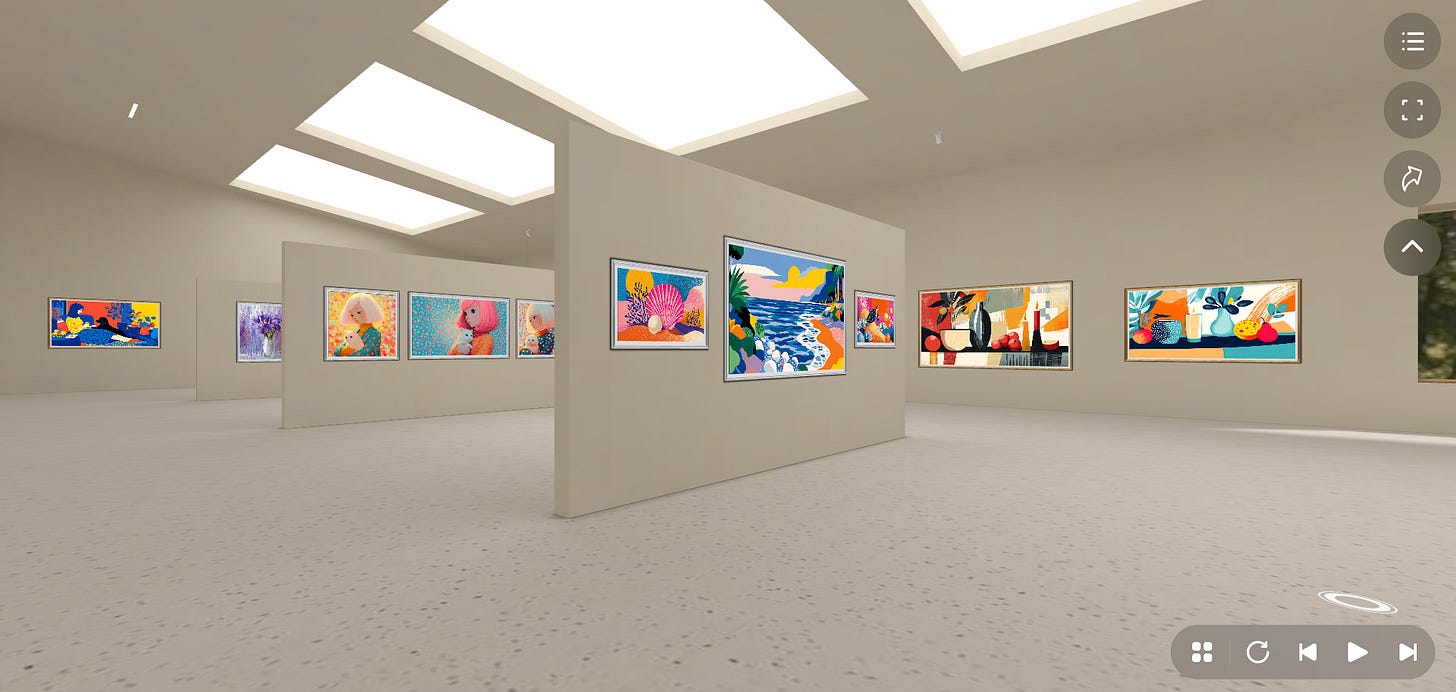
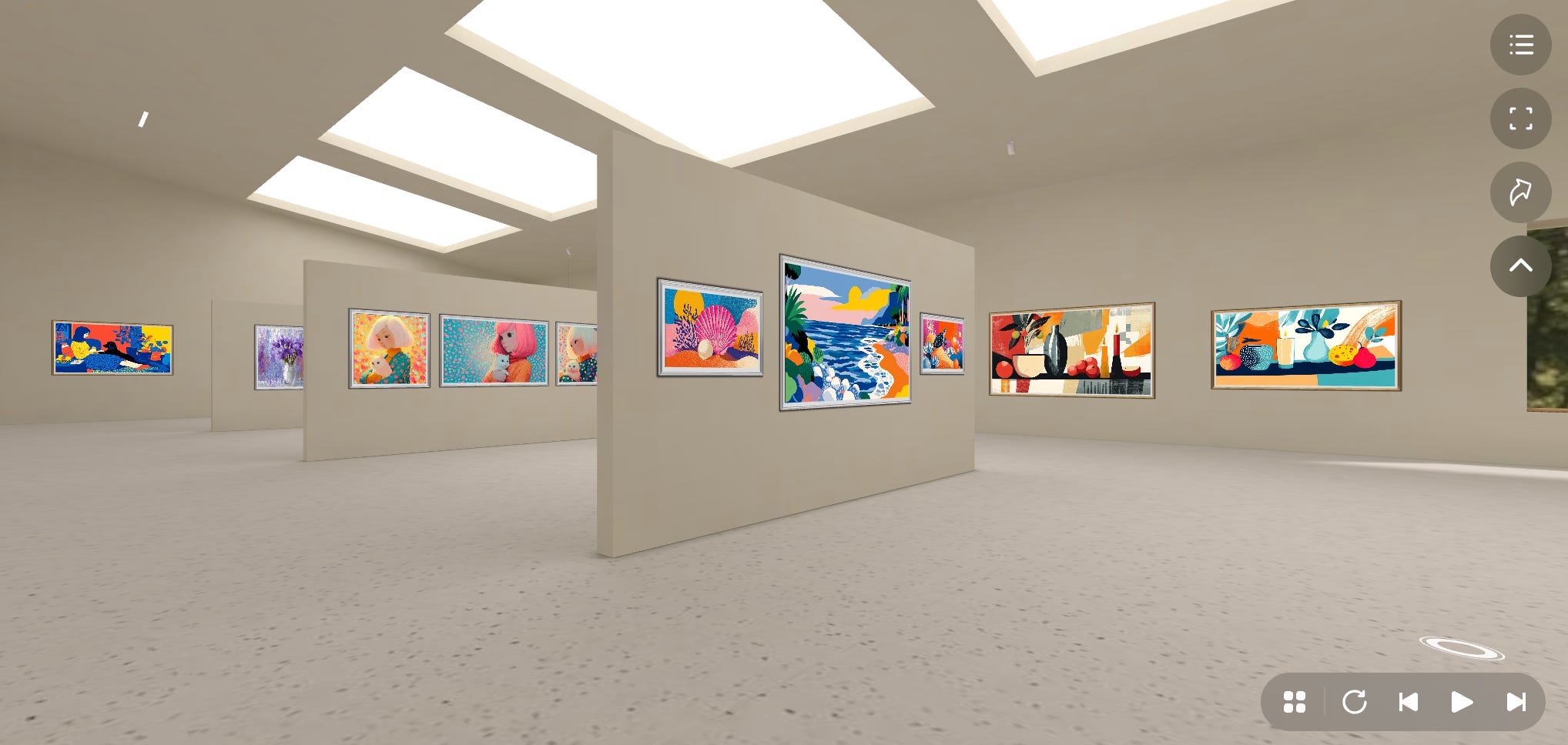
Build a virtual 3D exhibition that people can walk through directly from their browser. Pick a ready-made gallery, place images, videos, PDFs and explanatory text inside it, then publish the whole exhibition with one link.
I see this as potentially useful well beyond artists: consultants can exhibit case studies, researchers can curate evidence around a subject, photographers can build exhibitions, trainers can create learning journeys, and small firms can turn products or past projects into a browsable showroom.
What makes it interesting to me is the change of format. Instead of giving someone another folder, PDF or endless webpage, you can curate information spatially, deciding what they encounter, in what sequence and with what context.
ExhVerse gives editorial work a physical metaphor to work with and one that people already understand: the exhibition.
Free plan available includes 3 exhibitions with 30 works per exhibition.
Firecrawl
This is a tool that takes websites and turns their contents into clean, organized information that AI can actually work with. Instead of manually visiting dozens or hundreds of pages, copying text and cleaning it up, Firecrawl can do that work automatically. Think of a directory or of a catalog that needs to be fed by information that periodically changes. How do you maintain that workflow?
Thus it is great for monitoring competitors, tracking prices or products, collecting industry news, watching selected websites for changes, or building a specialized knowledge base.
The interesting opportunity: you can create your own selected territory of sources and have machines systematically collect what changes there.
Once collection becomes automated, your real work moves higher up, toward selecting the right sources, making sense of what emerges and spotting patterns worth paying attention to.
Free: 1K credits/month. It’s also open source.
WhattheGIF
Powerful 100% free video-to-GIF converter that does everything locally inside your browser.
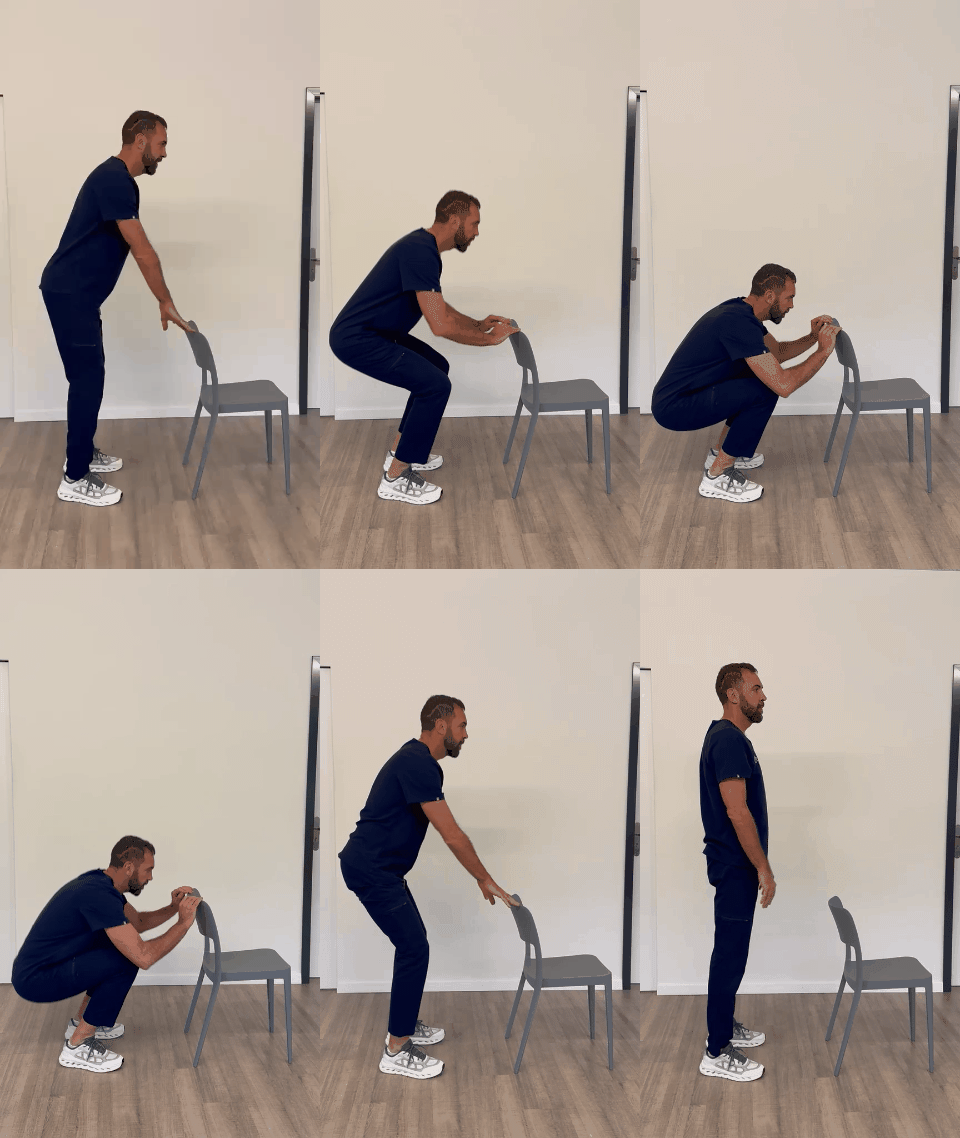
Converts short videos into animated GIF images that you can use in your content. The benefit is that when you place an animated GIF instead of a video, there is no play button to click, the video plays automatically, and it loops at the end.
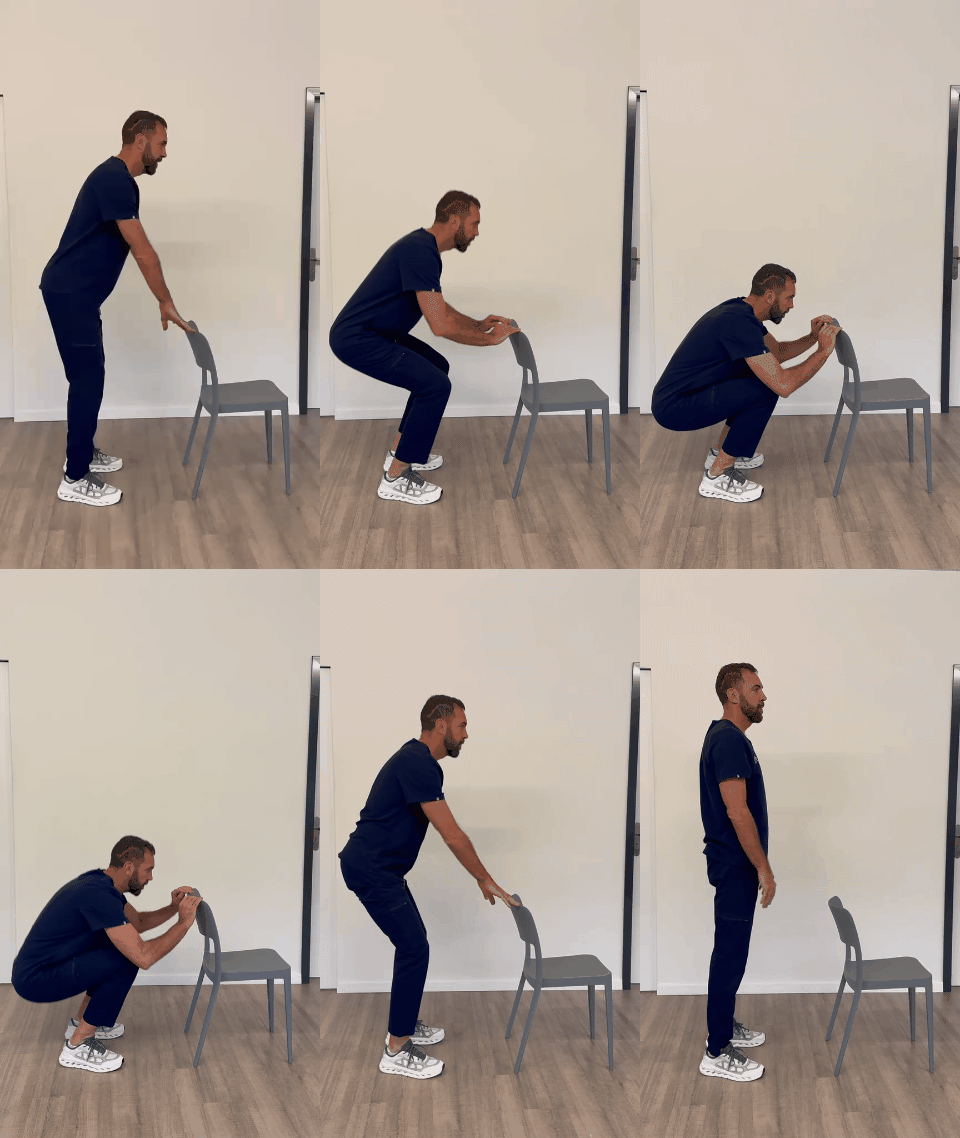
For example: I use this type of tool with a osteopath client who always includes in his newsletter some recommended exercises for some specific physical problem. He sends me the video, and I convert it to an animated GIF, so that, when inside his newsletter, it plays seamlessly as you scroll, just like it is doing here:
Frame-perfect trimming, cropping, captions, export to GIF, APNG or silent MP4.
Free, no signup, no watermark. Ad-supported.
Curation Monetized
3 interesting examples of revenue-making curated knowledge infrastructures.
2ManyBooks
by Philip Cronerud and Lisa Ziven
A social network, cataloging tool and marketplace built entirely around books.
It allows readers, collectors and independent bookstores to digitize and manage their libraries, track editions and estimated market values, discover books through people they trust, and buy or sell them directly.
In its marketplace, you can list your books, set an asking price or accept an offer from someone who wants one of them. Sellers keep 100% of their asking price.
An interesting additional feature allows people who curate their own book libraries to activate paid subscriptions. Subscribers can then get early access to the books, selections and recommendations they share.
Lapa.Ninja
by Tinh Nguyen
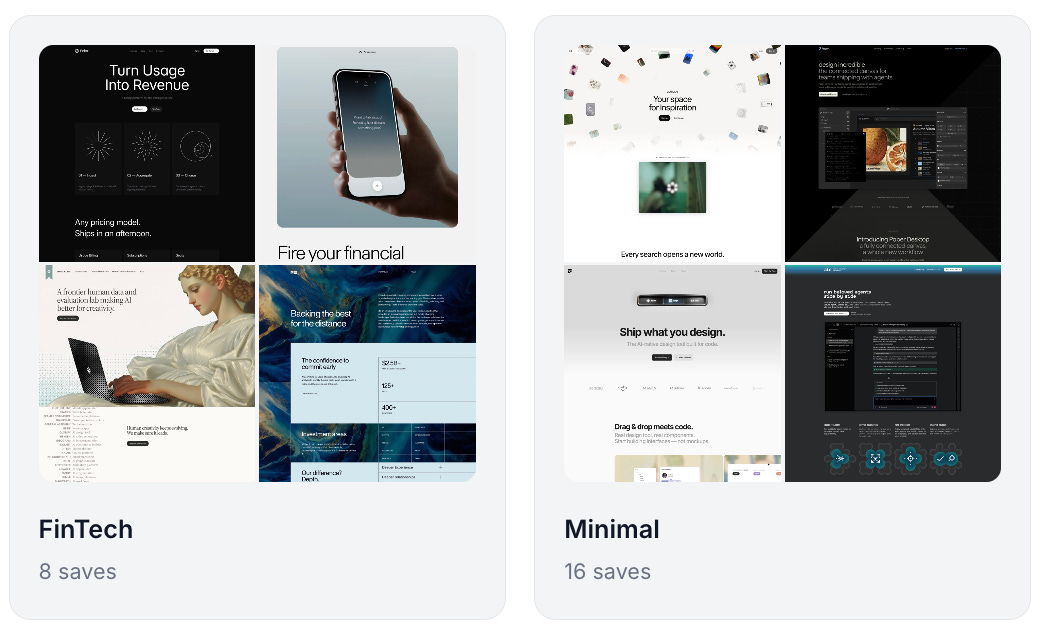
A curated collection of more than 7,400 inspiring landing pages and 15,000 full-page website screenshots, gathered since 2015. It is built for designers, agencies, founders, marketers and web developers looking for real-world references and inspiration.
The interesting thing: Lapa does not hide its curated knowledge infrastructure behind a paywall. Anyone can search and explore the entire archive for free, without even creating an account.
Free accounts can create up to five Boards, with 20 saved examples in each. Lapa Pro, at $9/month, removes these limits and the ads. It also provides early access to new features and a public design profile for showcasing and sharing your curated Boards.
The main collection attracts the audience. What Lapa monetizes is the ability to build your own layer of curation on top of it.
3) AlignedNews
by Robert Scoble and Levangie Labs
A top AI news radar for “industry-sector intelligence.”
It is built on 63 curated X/Twitter lists covering more than 100,000 accounts. Robert Scoble has created, curated and maintained these lists over the course of 19 years.
AI scans and filters everything these accounts publish, using sources, methodology and criteria curated by Scoble. It then synthesizes and contextualizes the most relevant signals.
The AI reads all signals, applies Robert’s editorial judgment and generates structured content with context—connecting separate stories that illuminate each other and explaining why a low-engagement post may matter more than its metrics suggest.
The site is also built to be machine-readable. OpenClaw agents, AI assistants and developer tools can consume its structured data through:
RSS feed — Top signals in standard RSS format
JSON API — Structured data with metadata
The main news feed is free to read. Read today’s AI news here. Here’s how it actually works.
How it monetizes:
Custom research reports
Enterprise plans and API access
Other Recs
Films
Lust, Caution - Aing Lee (2007)
Long, slow-moving adventure + passionate but impossible love-story, film. Recommended for those who like patriotic, chinese-flavoured intense love stories, unexpected sex scenes and that unique close-up framing of beauty and colors only rare author cinema has.
Plot: During World War II, a young Chinese woman, gets swept up into a dangerous game of conspiracy, patriotism and emotional intrigue with a very powerful political figure.
An interesting bit I discovered about this fascinating film is that, as his own director Aing Lee reports at the end of this interview, the perception of the movie across western and Chinese culture is radically different. While for us non-Asians, the movie feels very slow, for the Chinese, the key disappointment was being way too quick.
Here’s a cool trailer remix mini-cut by @monny1emano on YouTube.

Art & Music
“[uses] AI to make entirely new forms of art… Her surreal visionary videos and original songs are addicting and unlike anything else you’ll find on TV.”
Powerful AI generated images.
Great original music. Kelly composes, arranges and sings. Cool, r&b, chill vibes.
Publishes new content daily.
Here is a trailer video taste:
and here’s one of her many fantastic AI-generated music videos:
Paradata
Why/Intent: I wanted to experiment with this publication editorial format by gradually integrating content and resources that I used to publish through my other newsletters, Good Tools and Curation Monetized. At the same time, I wanted to move away from theory, concepts and frameworks - which I have been addressing in quantity - and toward pure curation play. Do, practice and show instead of naming, introducing and explaining.
A couple of weeks back I came up with the theme “Thinking in Public” as a possible topic for one upcoming TRUST-able issue. But I didn’t want a full lengthy essay on the topic, but rather a lighter curated piece, with what I saw as opening and then more material from others to complement it.
Process: Initially, I used Substack’s search feature to find interesting, little-known, new and yet-to-be-discovered authors matching the keyword curation, and then skimmed through the “Recent” results. This has always been a high signal-to-noise source for finding interesting stuff, though Substack has recently polluted the results by removing reliable reverse-chronological sorting altogether.
Then I chose to use the Duck Constellation curated format. I had a strong theme and already had in hand a few interesting articles that would support, expand and complement it, shedding more light on the same topic from different but complementary angles.
For the Good Tools section, I checked my T5 catalog recent entries, as well as the huge backlog of submitted tools that was sitting there and I hadn’t yet verified. I went through over 1,000 them and set aside four or five interesting tools that were good potential candidates for this edition.
For the Curation Monetized section, I checked my private Capacities repository, where I systematically save anything I run into that is a good real-world example of collecting, organizing and filtering information or resources and extracting monetizable value from them.
The rest, films, art and music, came from material I discovered accidentally: newsletters I subscribe to, films I had recently seen, and music I’d recommend to people with a taste similar to mine (not rock, non-mainstream, soul- and R&B-oriented, groovy or romantic in an original way).
The entire issue was written by hand, from scratch. No AI draft or outline. Pure intuition and natural flow. AI was used only to check my grammar, syntax and spelling, since English is not my mother tongue.
Times:
Research and analysis: apx. 4 hrs
Writing: 2 hrs
Formatting and links: apx 0.5 hrs
Paradata: 0.5 hrs
Verification and corrections: 1 hr
Cover design: 1 hr
Title and subtitle analysis and verification: 0.5 hrs
Testing: 0.25 hrs
Total apx time: 9.75 hrs
Tools:
Substack Search - for finding interesting authors/articles that intersect / complement / match this issue focus
WUWT - for synthesis and insights analysis on the articles I curated in this issue
Capacities - for research through my own interesting tools and resources saved
T5 - for research through unpublished tool submissions to my catalog
ChatGPT 5.6 - for:
background research on tools and resources selected
grammar and syntax verification
cover design execution

Cover image: Chess master explains the reasoning and logic behind his moves. Design concept by Robin Good, executed by ChatGPT Image 2.
Follow a path with a heart.

From Koh Samui (TH)
Robin Good