

✪ Proof by Curation: Demonstrate True Expertise Without Claiming, Smart Lecturing or Giving Advice - #55
The realization most experts haven’t had yet: Curation is the top strategy to build credibility, authority and trust.

If you’re an expert, consultant, or advisor, you already know your field. You don’t need to keep inventing new ideas to prove it.
The fastest, clearest way to build authority today is by showing the map of what you know, the patterns, the contradictions, the evolution of thought, not just your latest conclusions.
Because by curating you actually show proof.
When you curate, you reveal how deeply you’ve explored your domain, how well you know the landmarks, the blind spots, the connecting lines. That’s what builds trust.
Not more content, but more context.
What I see: self-proclaimed experts claiming wisdom and suggesting what to do, where to look, how to achieve this or that.
But in a world already drowning in information, more claims and more advice, often not strongly supported by logic or proof, don’t prove high credibility or competence, they actually diminish it.
It’s should be evident that if everyone can publish instantly and AI can write with flawless logic on any topic, originality alone stops being a differentiator. What instead become unique, unpromptable characterizing traits, are what I’d call:
3D HD depth (comprehensive in-depth understanding) and
Navigational orientation (familiarity with the forest, its geography, orography, as well as the history of those who have opened trails and paths through it).
The yet undiscovered but most needed role today is the one of the sense-maker. Someone who can map and make sense of what already exists while interpreting it from his/her unique perspective for a specific purpose-driven context (audience and need).
Table of Contents
The Two Guides
Imagine you’re about to explore a vast, unexplored, wild jungle with either one of two “supposed” expert guides.
The first guide is eager and confident. He picks a trail, tells you stories as you walk, and shows you fascinating plants along the way. You learn things, but you have no idea where you are, or what else might be out there.
The second guide meets you before the hike. She unfolds a detailed map of the whole forest. She points out the main trails, explains which are safe, which have been explored and by who, which lead to waterfalls, which to cliffs, which are long, and which are steep. Now you understand how the forest is structured, and you can decide which path you actually want to take.
Who do you trust more? The one who walks you through the jungle, unveiling new surprises as you go along, or the one that maps and explains it to you before going?
That’s exactly the difference between most of today’s content creators and those who I’d call trusted guides (curators). One keeps creating new content, new ideas and suggestions. The other tries to make sense of what’s out there, organizes understanding.
Curation as Proof
The key, and little understood benefit that curation provides, is that it turns invisible qualities, like taste, selection (judgement), ability to organize and explain as well as transparency and integrity, into visible evidence of one’s competence and expertise.
a) Proof of Competence:
If you know what exists in a specific field, how it fits together, and what actually matters, if you can see beyond your own perspective and locate yourself within a broader field, then you are showing competence.
b) Proof of Judgment:
If you can filter noise, identify what’s worth of attention and explain why it matters, then you’re demonstrating that your expertise isn’t built on the whim or on superficial personal opinion, but on deep comparison and analysis.
c) Proof of Integrity:
If you cite your sources, acknowledge who has influenced you, who you have learned from and show your reasoning, if you don’t claim ownership over the ideas you present, you are clarifying the evolution of thinking and in doing so you become verifiable, not just visible.
AI can produce writing that looks very smart and intelligent. But AI can’t demonstrate taste, judgement or ability to select. Why? Because AI is neutral, doesn’t have a context, a mission or an audience and need to address. Unless you provide it with one. AI can’t show that you’ve looked at a hundred things and chosen three, for a reason, unless you provide the criteria and logic through which to make that decision.
That’s human stuff. That’s what people trust.
You Already Trust Curators Every Day
Realize this: We trust curators constantly, even if we don’t see the people doing it as actual curators.
You don’t try every pizzeria in a city. You rely on your friend from Italy who has moved in a few years back and who knows the difference between a pizza that’s good and one that’s sublime. He has the experience and the sensitivity you haven’t had time to develop.
You don’t listen to every new song released on Spotify each day. You follow certain DJs, specific radio stations and brands that make those explorations and discoveries for you. You trust them because you know they share your same taste and musical values.
You don’t read every academic paper. You rely on researchers who synthesize what matters and show how different findings connect.
You don’t test every prompt or marketing framework. But you listen to those experts who go out of their way to test and maps the best ones, compares their logic, and tells you which one works in which context.
Same for books, movies, TV series. You rely on trusted guides, expert recommenders, cultural and technical sommeliers.
It’s a universal role, sitting in front of you from millennia. In every domain where abundance overwhelms, trust shifts from those who create to those who can pick, filter and select.
Why Most Experts Resist This
The general understanding is that curation is a kind of passive, time-saving activity, that has little depth and can sometimes replace having to write new content. It doesn’t look as heroic as “creating.” It doesn’t feed the ego as easily. It feels shallow, lame, not insightful or profound. How can commentary or collecting be of value?
Thank you “content marketing” for having instilled this false idea in people all over the world, to sell your verb, services and tools.
Reset that concept.
Curation is none of that. Curation is actual creation through critical and purposeful analysis and organization. It is what turns knowledge into understanding.
Yes, it’s also harder. You need to read more, analyze more, and make choices based on evidence, not instincts.
AI can’t really curate. It can do fantastic research for a curator, but it can’t have the curator experience, selection criteria, value and perspective to make coherent, tasty choices. It guesses, from the average of what most people would choose. It operates in obvious, high-probability territory. It reveals nothing new, it uncovers no hidden patterns or deep insights. It can’t.
Yes, AI can summarize, describe, remix but it can filter out, pick and select or draw out invisible patterns unless you provide the criteria and logic through which to make that decision.
That’s why I believe that in the AI age curation becomes the highest proof of competence. If someone can curate his space, then he/she must be highly competent, with a lot of experience and with a strong, publicly claimed perspective and that is what makes him/her worthy of my trust.
How This Connects To the Rest
In previous TRUST-able essays, I have already started mapping the individual pieces of this landscape:
In “Curation as Knowledge Infrastructure” I presented the idea that real authority comes from connecting ideas across sources, building archipelagos of meaning rather than isolated posts.
.In “How to Add Depth” I highlighted that depth is a function of visible lineage: showing where your thinking comes from, not just how it sounds.
.In “When Everyone Is a Guru, Curators Are Kings” I declared that credibility now belongs to those who collect and filter truthfully, not to those who perform brilliance.
This article doesn’t repeat those pieces, it connects them. That’s the act of curation. That’s what proof looks like.
How to Start Practicing Proof by Curation
Forget fancy tools or complex frameworks. Start with simple actions any real expert can take but almost nobody does.
1. Review and Compare
Pick a topic in your field. Find the ten best articles or papers written in the last few years. Summarize what each one says, how they differ, and what’s missing. Do get critical help and suggestions from AI. Then publish your comparison.
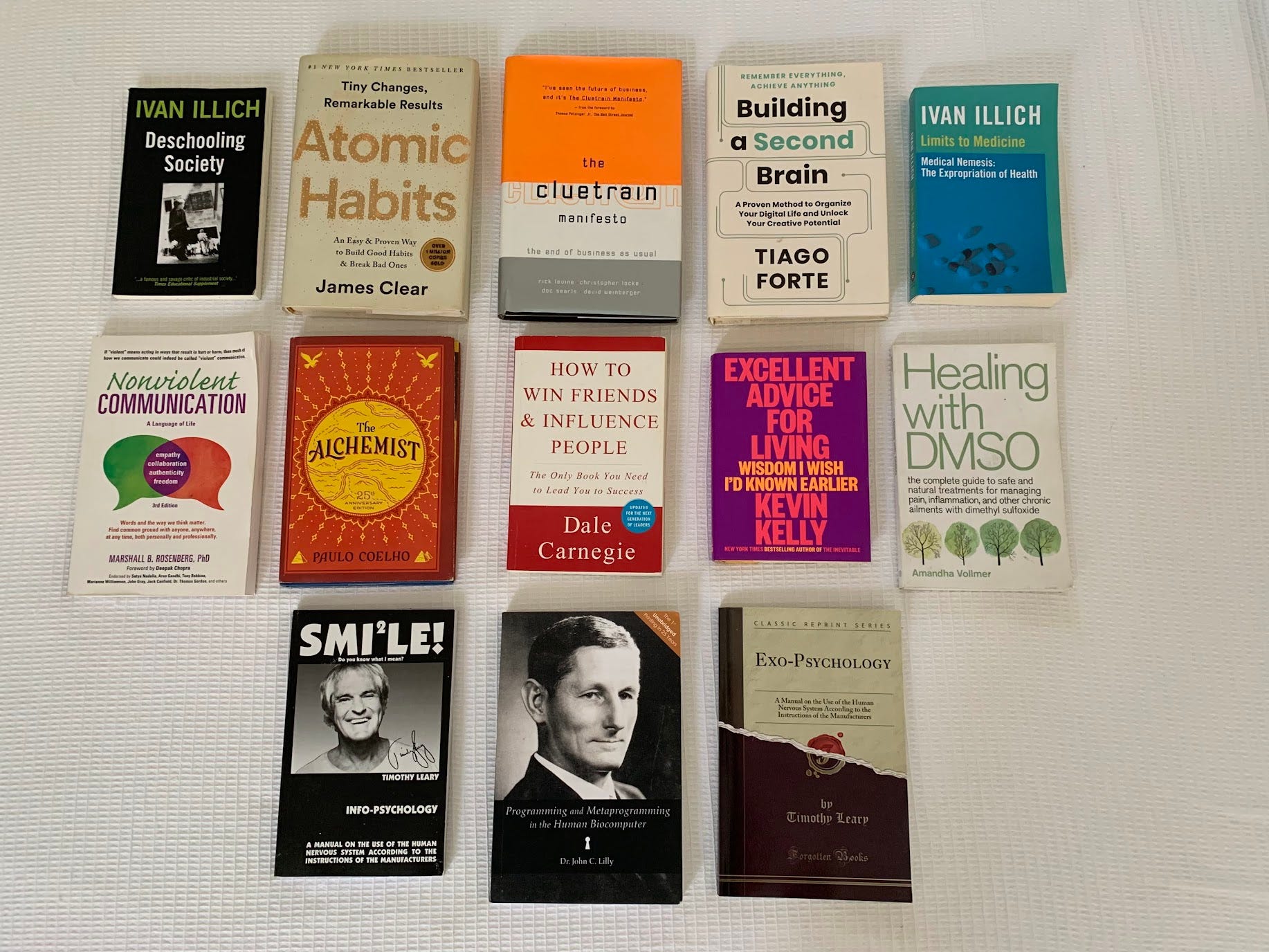
2. Curate Your Pillar Books
If you are an expert, it is likely that there are at least three or four books that have shaped your values, and direction in a certain field. Or in life. Don’t just recommend them, but show where they converge and how they contrast in philosophy, scope, and usefulness. Use AI to help you analyze such traits relative to your values, perspective and mission.
3. Map the Experts
Identify the main players in your sector, thinkers, practitioners, researchers and highlight what each is best known for. Show who do you think knows best and explain the why.
4. Trace Evolution
Pick an idea, method, or practice and show how it’s evolved in the past decade or two. Where it started, who advanced it, what changed. Build a timeline that shows at a glance of key ideas in your sector have evolved.
5. Build a Learning Path
Research, find and vet a set of articles, videos and podcast episodes that, when properly sequenced and with the addition of your commentary, framing and perspective can act as an effective way to master a specific subject.
.
Each of these activities can effectively leverage AI as a research assistant, not a substitute. AI can help you find, organize, and summarize, but the judgment stays yours. That’s the visible part of expertise.
Real-World Examples: From Claims to Evidence
When you curate, you stop needing to claim authority. You actually show it through the things you curate.
People can transparently see your thinking, your process, your values and your quality standards. They understand that your insights come from immersion, not improvisation.
You become a reference point, the one others quote, cite, or turn to when they want clarity. Your credibility grows faster because it’s built on visible, verifiable proof.
Plus, you learn more yourself.
Curating others’ work reveals patterns you never noticed, contradictions you never questioned, and blind spots you can finally fix. You don’t just gain trust, you gain understanding.
Here are ten real examples of constructive, meaning-building curations:
Thomas Klaffke - Creative Destruction
Business As Unusual
→ Here is deep curation in action. An organization of alternative business narratives into a 76-slide report blending concept mapping, references, and resources. It’s curation as proof: analytical, research-based, and integrative, showing his grasp of systems thinking and his ability to translate complex ideas into actionable insight.
.Juan Salas-Romer - Build To Thrive
Build to Thrive | The Blueprint | Week of November 10th, 2025
→ Juan practices layered curation: he selects three expert creators, summarizes their methods, and then extends that with insights from McKinsey, Bain, and Forbes. It’s curation as proof by integrating diverse expert work into one coherent system that demonstrates judgment, synthesis, and applied understanding.
.Mapu - Instead of Doomscrolling
Where to Find Media to Consume Instead of Doomscrolling
→ This is a large-scale meta-curation, mapping hundreds of trusted media sources across topics and formats. It’s curation as proof: transparent, organized, and grounded in personal experience, demonstrating expertise in filtering abundance into a usable, meaningful ecosystem for mindful learning.
.ADRIANA L. - Scenius Mag
Trust Networks
→ Curation and analysis of diverse perspectives on AI, creativity, and human meaning. It’s curation as proof because Adriana integrates analysis, metaphor, and viewpoints from other thinkers, demonstrating depth, judgement and the ability to build coherence across independent voices and ideas.
.Matteo Azzolini - Why You Should Care
Why Fashion Is Obsessed with Archives
→ A curated analysis of fashion’s archive trend, that brings celebrities, runway cases, and brand strategy into a clear argument. It’s curation as proof as Matteo picks specific examples, names risks, and shows causes/effects, demonstrating the depth of his research and experience, balanced judgment and the ability to connect culture, commerce and creativity.
.Gabrielle Scout - Revue
Sunday Inspiration: Volume 2.45
→ If you are into being an interesting woman Gabrielle’s curates sensory moods, art, fashion, books, and reflections into a weekly cultural digest. It’s curation as proof, showing her depth, aesthetic sensitivity, and editorial intelligence by weaving diverse inspirations into one coherent, emotionally arranged experience.
.Caitlyn Richardson - Milk Fed
Media Consumption: Articles, Video Essays, Podcasts To Make You Smarter
→ Caitlyn curates books, films, recipes, and cultural finds into a cozy reading-letter that orients readers toward meaning and mood. It’s curation as proof of sensitivity and trust, showing taste, discernment, and emotional intelligence through thoughtful selection and context.
.Stepfanie Tyler - Bad Girl Media
The Art of Creating Your Own Reality
→ A look into Gauguin’s life and art to explore how creative freedom rewrites reality. It’s curation as proof as the author arranges biography, critique, and personal reflection to demonstrate sensitivity, cultural awareness, and the ability to connect history, emotion, and ethics into an organic understanding.
.Dickie Bush - Dickie’s Digest
22 Inconvenient Truths I Wish I Knew At 22
→ Personal lessons distilled from life experience. It’s curation as proof through reflection, organizing lived insights instead of theories, showing judgment, humility, and learning built from consistent observation.
.Steve Bryant - Delightful
{ D } 92: Curiosity and Research 101
→ A practical starter pack for researching any topic: questions, sources, and step-by-step process. It’s curation as proof, as the author organizes methods and references to reduce noise and guide action, showing his competence, judgment, and care.
Curation Is the Best Way To Show You Are an Expert: Not Writing Another Article
Expertise today is no longer proven by how much you can produce, but by how deeply you can understand, connect, and explain what already exists.
To stand out today you do not need to put out more advice. You need to take the time to observe the field, to analyze it, and to help others see it with greater clarity.
When information becomes infinite, value shifts from generation to organization.
Curating is not an accessory to creation. It is the very act that demonstrates you have done the work, that you have explored widely, compared thoughtfully, and developed a personal perspective based on evidence and experience.
Every time you organize ideas, show their relationships, cite your influences, and make your reasoning visible, you give tangible proof of competence. You are not saying “trust me,” you are showing why you can be trusted.
This is not theory. You can start proving it right now. I have given you sufficient examples of how you can go about it. You can revisit the most important thinkers and works in your field, not to quote them, but to show how they align or diverge. You can identify recurring mistakes, common illusions, or emerging patterns that others have not yet named. You can draw timelines that trace how ideas have evolved, or maps that connect the people and practices shaping your domain.
This kind of work changes how people perceive you. Instead of another voice with opinions, you become a point of orientation. Instead of a performer competing for attention, you become a reference, someone who others can rely on to make sense of complexity. An interpreter. A connoisseur. A trusted guide. And that is the most powerful and enduring position you can build online.
Because in the end, authority is not a performance. It is the byproduct of how well you make knowledge usable for others. And curation - the deliberate act of selecting, comparing, and connecting - is the most direct way to make that proof visible.
What I Can Do For You
.
a) Improve Your Credibility and Trust
Analysis of your content, positioning and goals to identify key editorial strategies to create content that best aligns with your competence and that rapidly builds trust and credibility around your focus.
.
b) Positioning and Personal Branding
Critical review of your market positioning to identify key strengths and weaknesses. Define strategy to differentiate yourself from the competition while increasing the practical value you bring to your readers.
.
Interested?
Send me a direct message.
Follow a path with a heart.

From Koh Samui (TH)
Robin Good
As a long time curator I resonate with your message. I believe that in the age of AI, curators have an opportunity to create trusted sources of information and use AI as a conversational interface to that knowledge. Our KChat solution does just that.
Here is KChat in action:
what are some strategies by Robin Good regarding curation?
- Prioritize human-curated, expert-driven resources to counter algorithmic bias and filter bubbles. (📄 Ref #0)
- Curate around clear themes; add context, perspective, and a viewpoint—not just links. (📄 Ref #1)
- Vet sources; distill and synthesize to save time and deepen understanding. (📄 Ref #1)
- Build specialized, expert-led directories/catalogs for trustworthy niche discovery. (📄 Ref #0)
- Make curation ongoing and participatory; aim for public benefit. (📄 Ref #1)
References;
https://optimalaccess.com/kbucket/Marketing-Channel/content-marketing/overabundance-of-disorganized-and-unverified-information-search-is-broken
https://optimalaccess.com/kbucket/Marketing-Channel/content-marketing/why-to-curate-information
Hi Robin, thank you so much for the shoutout and for this great piece on the importance of curation!
I was doing research on curation for my university thesis and came across an old paper titled "Attention Doesn’t Scale: The Role of Content Curation in Membership Associations" from over 10 years ago and you were mentioned in it. This led me to do a bit more research on your work which of course led me to this publication. Imagine my shock when I see myself mentioned in this post, it truly felt like a full circle moment!
All of your work is certainly going to be quite useful as I develop my project so thank you for what you do :)