


Intro
What I truly love about people, is not just how original, bright or inventive they are, but how human they can be.
As a matter of fact, as soon as I start to read from an expert or author I just discovered, my first instinct is to see whether I can feel the person behind the words.
Are they always speaking from atop a professor pedestal, a prescriptive desk like doctors and academic teachers, or even from a scarcity and persuasive-leaning angle? Or are they humble, honest and accessible enough to the point where I can feel them as human beings that I can relate and talk to?
The ones that follow are a few of my and other people’s thoughts, opinions and practical suggestions about humanness relevance in the age of AI and how to nurture it.
ToC:
9) Personal Story: What Humanness Is For Me [Video]
.
1) Defining Humanness
Humanness, in my work, is not emotion or personality.
It’s the visible trace of how I actually think, learn, and make sense of the world.
It’s the connections I make between ideas, the sources I credit, the mistakes I keep in the open, and the curiosity that drives me to dig deeper instead of performing.
To me humanness is also the ability to share context, to ask difficult questions, to find new connections and to put great care into helping others understand what I have discovered.
Humanness is the part of my work that can’t be automated, because it comes from authentically being who I am while sharing the road I am actually walking through.
Humanness is everything that shows I’m not putting up a facade to look better, smarter or more knowledgeable than I really am.
Humanness is whatever shows that I’m exploring this territory in real time. It’s the refusal to perform expertise, and the choice to make expertise usable.
Transparency of process, not polish. It comes from showing the path that brought you to those ideas. It’s the opposite of the “perfect apple with no taste” syndrome, that AI-flattened voice that smells like plastic.
Something that grows on sharing your journey in a way that helps others question and refine their own paths.

Embracing our humanness is what makes us connect with other humans.
We like identifying and are often drawn to those messy, complicated parts of other people, because in them, we’re reminded that we’re not alone in being messy and complicated ourselves.
The glitzy, glammy, cleaned up version of being human (which is often the one we see in digital spaces) is at first tempting, alluring, a touch inspiring, but usually just ends makes us feel worse about ourselves.
.Source: Anna Brones - “On the humanness in our creativity”
2) Ways to Nurture Your Humanness Online
Here a few simple ideas of things one can do - when operating online - to keep his humanness present and visible.
There’s one common denominator for all these humanizing options: they look easy, but they require balls.
Courage is a sign of strong humanness.
Handwriting on paper
I have not seen anyone doing this yet, but I bet there will be many. As everyone writes through a keyboard in front of a screen, those who will courageously go back to handwriting on paper will certainly look and smell differently than everyone else.
.Voice
Publishing voice snippets adds a human touch like few other things. Like handwriting, our voices are so personal and unique, that they are a unique highly recognizable fingerprint of who we are and of our character too.
.Showing-up in person - live
There’s not quite something like showing up with your full body, face, voice and character. Whether physically or online, showing up and interacting with others, offers an opportunity to be known, appreciated and felt like no amount of writing can. It takes courage to do it, because it really shows who you are, how real and human you are. It immediately separates performers from true human beings.
.Sharing personal memories
Making small parts of your personal life accessible when they have been means to discovery, understanding, growth, is a generous and altruistic approach that shows vulnerability, acceptance of one’s own limits and ability to learn from one’s own mistakes.
.Thanking other humans
Giving a small stage to those people who do touch, caress or gently influence our lives shows integrity and humbleness.
.Sharing personal art / drawings / doodles
Anything you create that is truly you, allows others to better appreciate the nuances of your unique way of being human. But only if you let them.
.Showing personal objects
What you own says a lot about who you are and what you value. Shoes, shirts, hats, what you drive, your bed or your writing desk… the view from your window. Personal objects reveal your world, what you have chosen, what defines your human, non-digital universe.
.Gifting someone with something you can’t buy
That’s one of the most wonderful signs of humanness. It can be a drawing, a flower, a few shells from the beach, a playlist, a printed picture with a poetic thought of yours… something that comes fully from you, not from making a purchase.
3) Approaches That Rapidly Reduce Humanness Online
Likewise for the other side. There are many approaches to communicating and sharing online, that negatively impact our humanness. Here a few of the most common ones.
.
a) Persuasiveness
Utilizing persuasion methods and approaches to convince others. Dialogue is human. Persuasion, can be highly manipulative and generally smells like profit-extraction focus. It has zero humanness.
.
b) Prescriptiveness
Giving constant dogmatic advice to others about what to do and how. Showing the way through specific rules and steps. The message that gets through is: I know, you don’t. Here’s what you need to do to fix it. Pretentiousness, superiority, self-orientation is what gets across. Listening, sharing, humbleness, empathy - the basic signs of humanness - are lost.
.
c) AI writing - excess polish
Using AI to draft, write, polish and refine written content online, may give the impression of producing higher quality content than one could ever write. While that may be true, by using AI as a writing assistant, such content smells like plastic from the distance. It is a mask that makes you appear how you would like to be, without going through the effort of learning it. It signals fakeness, pretending, and self-orientation..
.
d) Writing as if talking to an audience
Communicating online by addressing readers / viewers as one audience, much like it’s being generally done in television, broadcast media and theatres tends to show ability to perform and to entertain, but gives away little of one’s own humanness.
.
e) Use of AI images and videos
Using clearly recognizable AI-generated images / videos tends to take away from what looks and feel human, raw, authentic. Like for writing, excessive polish and perfection, these things may positively impact initial impressions surrounding your expertise and tech competence, but they say very little about who you - as a human - really are.
.
f) Brand in place of name
I do not have supporting evidence for this, but my impression is that those who replace their full name and last name for a brand, a nickname or acronym have a harder time building a relationship with me. I like to build relationships with humans with a name. Humans have names and last names, and taking these away and replacing them with brands, acronyms or smart-names makes them decidedly less relatable to me.
.
g) Logo in place of photo
I build relationships with humans. Not with their logo. I build a relationship with a car salesman not with his dealership iconic sign. I trust and like to be friend with the guy at the gas station. Or with the master at the gym. I trust and like them because of something in the way they are, as humans. Never because of what logo they have chosen to adopt. That’s why online I trust most those who don’t hide their face.
4) Being Human Means Being Vulnerable
Very few people are willing to do so. That’s why the few who do get such a great advantage over the others.
“The only way to stand out is by choosing to share the imperfect parts of your journey, the scary bits, the human messy parts, anecdotes you’d share with your close friends and build trust with your audience deeply.
Which means:
more screenshots from your computer
more behind-the-scenes content,
more building-in-public.
It requires showing a bit more skin than normal.
You have to be more vulnerable than previously.
Only then, people will resonate with your content and stand by you.. otherwise your work has a great risk to be ignored…”
.Source: KP - “I asked ChatGPT about building in public and here’s what came out”
5) Three Types of Content To Build Humanness
“Principles, Process, and Proof are the three types of content where people won’t just enjoy consuming it, they’ll also be curious about you, the person who created it.
Think of it as a spectrum:
Simple insights anyone can copy → all the way to undeniable evidence that you’re doing real things, learning real lessons, and accomplishing real results.
When you use all three of these intentionally, your content shows that you’re a real human with a real point of view, someone who’s actually moving, building, experimenting, and thinking in public.
And that’s what makes you a credible person worth following.”
.
Source: Taylin John Simmonds - “How to grow on Substack…”
6) Recommended “Humanness” Film
Alamar (2009)
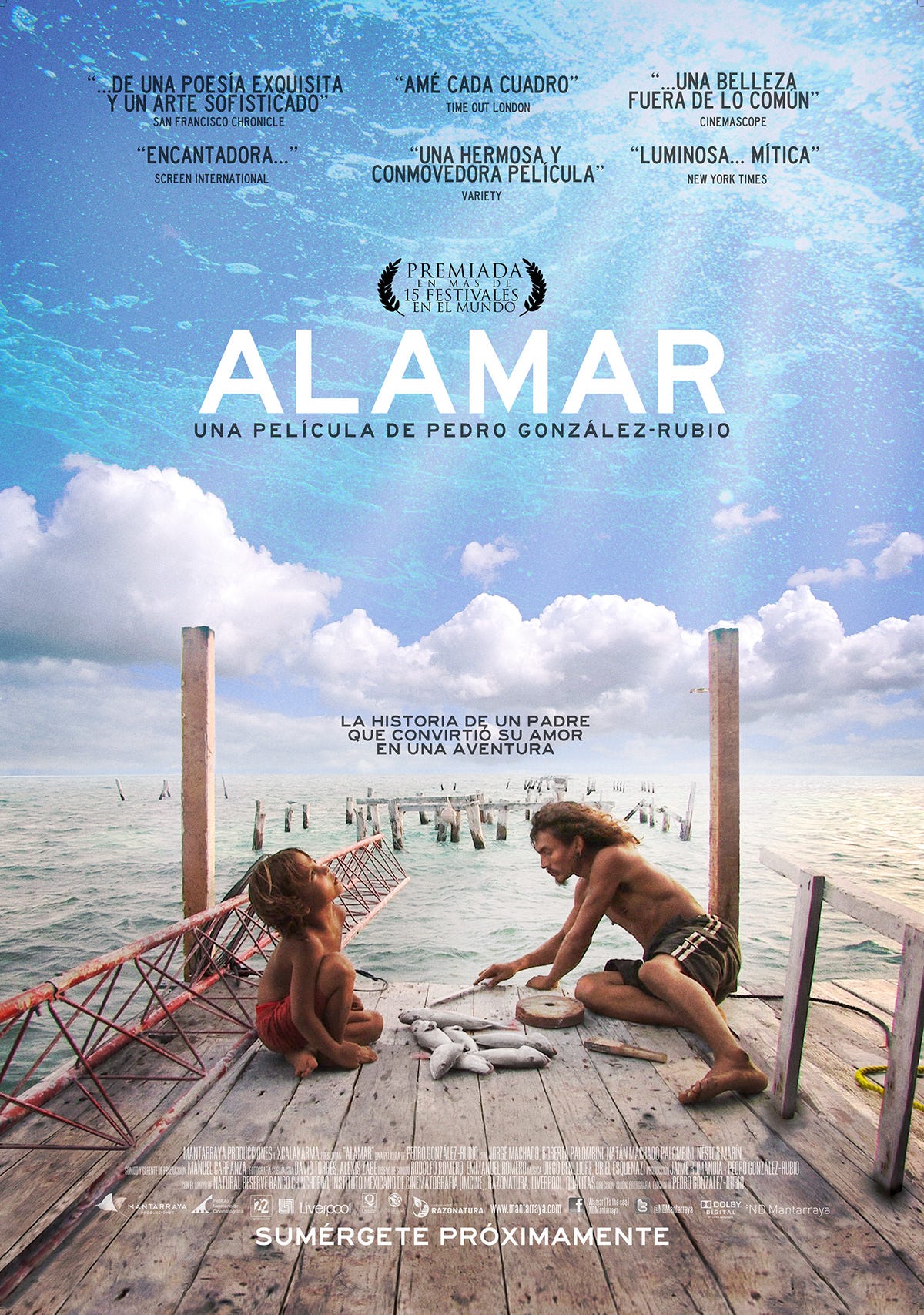
Indie - non-acted - film about a kid born from a relationship between an Italian woman and a native man of Mayan roots. The kid, Natan, leaves Rome to spend a holiday with his dad off the Banco Chinchorro coral reef in Mexico. No thrilling plot or unexpected surprises or drama. But plenty of humanness, the kind that feels very close to my sensibility. Every time I watch it I feel touched by the authenticity of these two human beings.
7) Recommended “Humanness” Mirror Prompt
Copy and paste this prompt in your favorite AI assistant. Its scope is one of helping you become more aware of your unique humanness traits, so that you can nurture them to keep what makes you “human” as relevant as what you’re expert about. Use it when you feel your voice is drifting into plastic-smelling AI territory and when you want to grow greater trust with your audience.
“Given everything I’ve written, published, created, shared, or expressed so far — including my tone, my obsessions, my experiences, my values, my patterns, my contradictions, and the way I naturally think — identify what makes me uniquely human as a creator and explain these traits in detail.Do not flatter me. Do not use generic labels like ‘authentic,’ ‘passionate,’ or ‘creative.’Go deep. Look for the specific human traits that emerge from: – the way I connect ideas – the way I make sense of complexity – the type of problems I gravitate toward – the kind of care I show when I teach or explain something – the patterns in what I notice, value, or challenge – the moments where my humanity shows in the cracks and edges, not in the polishThen, once you have identified these traits, explain how I can actively cultivate them in my writing and publishing, especially nowadays where speed, efficiency, and AI-generated polish can easily dilute my voice.Give me a practical and honest analysis of: 1. Which parts of me I must protect at all costs. 2. Which human qualities I should amplify intentionally. 3. Where AI makes me weaker (flattening, smoothing, removing texture). 4. Where AI makes me stronger (research, synthesis, structure). 5. How I can design my publishing process so that my humanity is not lost but becomes my main competitive advantage.Speak plainly. Focus on clarity and usefulness.Help me understand who I am as a human creator, and how to build a body of work that could only come from me.
8) Video Anectode: The Restaurant of Mistaken Orders
A short video highlighting a highly successful albeit unorthodox way of allowing humanness to express itself fully.
Duration: (1’:49”)
via Storythings - “Being Bored, Being Bad, and the Restaurant of Mistaken Orders”
9) Personal Story: What Humanness Is For Me
Here is something very human, that very few know about me. I have never shared or promoted this video, because of its very personal nature. In it I recount of a personal accident and the true story that followed. (September 2012, Rome, Italy).
Duration: 20’:38”
Why This Matters for Anyone Trying To Build Trust and How It Connects To The Rest
“Humanness” is the missing layer behind everything weʼve been talking about in TRUST-able. You can have proof, depth, systems, filters, beautiful curation… but if the person behind all this work, cannot be sensed, trust collapses.
What people want is not just clarity or utility, but a sense that there is a real human mind doing the selecting, connecting, and standing behind the work.
This ties back directly to three key ideas I’ve already explored:

Credibility comes from being a living proof, not from polished content. Trust grows when people can feel the human behind the ideas, not the performance.
.


Trust is built by the way you organize knowledge, not by producing more of it. Mapping, connecting, and contextualizing are human acts of discernment, not mechanical tasks. They require personality, taste, experience, even doubt.
.

Authority today comes from making things usable, not from sounding smart. Designing frameworks and systems is meaningful only when the creator’s judgment, lived experience, and care are visible.
Humanness explains why these practices work.
They work because people don’t trust flawless outputs. They trust humans who think, choose, experiment, and leave fingerprints on their work. Humanness is not a poetic add-on. It is the substrate that makes all the previous principles actually function.
10) Where Would You Like To Go Next?
Cover image: An image that warms my heart every time I see it. My good friend Dr. Hugo Orozco and his beautiful son. June 2021, Holbox island. Mexico.
☞ Struggling To Turn Your Expertise Into Something that Your Readers Trust and Want To Subscribe To?
I am planning an online workshop (90 mins) in which I help experts / consultants who to:
a) curate and organize your knowledge using curated formats in a way that separates you from your competition and really highlights your authority.
b) transform your expertise into evergreen high-value content resources that increase your visibility, authority and trust.
c) stand out as a trusted guide in a crowded digital space.
If interested (it will also be recorded), please leave your name here:
Waitlist.
☞ Tools I Personally Recommend
Generate infinite Substack Notes from your articles, auto-schedule them, discover the best times when to post, and track all of your key performance indicators (likes, comments, subscriptions, etc.) in a simple to use web app.
WriteStack
.An interactive, intelligent repository for the most interesting stuff you find online. Articles, inspiring book passages, images, videos, podcasts. Search through your collections and everyone’s else public ones, find invisible connections, create visual maps.
Sublime
.The easiest and best designed screen recorder I have ever used. Feature-rich: auto-editing, transcriptions and auto-captions, alternative layouts, green screen and a lot more. Free version available to test it right now.
Supercut
.
The tools above are ones I actually use, pay for and value. If you try them through the links above, I may receive a small commission. It helps me keep TRUST-able independent and free, and it doesn’t change anything for you.
N.B.: I only recommend tools that I personally use, have paid for and that genuinely make my work easier or better. I pick small, well crafted tools made by people who care about what they build, who stand behind their work with their own names and who can be actually contacted and talked to.
.
Follow a path with a heart.

From Koh Samui (TH)
Robin Good
.
I loved this piece so much. It's so HUMAN and it shows.
People can tell when writing has that AI-polished feel , trust starts slipping the moment they do.
Ironically, the messy bits are what make writing human: typos, a screenshot of a rough outline, a quick voice note of you thinking out loud, or a clip from a live call where someone pushes back. Those moments reveal judgment, trade-offs, and how you got to an idea, so readers feel like they're seeing a mind at work, not a finished product on autopilot.
Thank you!